Through peer review with shoyuhaman and Jackson T, we shared and introduced each other’s project content and room for improvement. For my project, the advice they gave me was that the development and application of virtual technology at the core of the project and how to correctly use concepts to tell the content of the project were the most important, while the later development of the project was also very difficult for the expansion of the physical image and the selection and application of physical technology. Because of the excessive details of the model, if 3D printing is used, the cost and output effect may not reach the expected impression, so the substantive improvement of the character image needs to be adjusted in the later stage. I am also very interested in the content of their projects. For example, shoyuhaman mentioned that his project is to make a VR game. As far as I know, in the VR game experience, many people have very positive feedback, so how to stand out in the game is a problem he needs to consider. At present, the variety of games and the difficulty and freedom of development are very strict standards, so it is a factor that needs to be considered in terms of appeal and audience. As for Jackson T’s project, I am actually the most interested. He needs to have a solid learning of media editing and operation within one or two months before he can complete his project. Even though the project content is not mature at present, the difficulties and challenges he needs to face in the follow-up work are far more than my project. I learned a lot and was very happy to discuss the project with them.
By combining customization, real-world assets, and cutting-edge technology, the UOW ISA Community Admission Letter Project redefines the onboarding experience for international students at the University of Wollongong (UOW). The idea features an AI virtual assistant, Octavia, who provides full support through revised admission letters and engraved business cards with a two-dimensional code. This paper examines the project’s aims, implementation, and benefits, with a focus on its role in building a welcoming and inclusive atmosphere. Challenges, such as technical concerns and cultural sensitivity, are considered alongside sustainability considerations. The paper continues by outlining the project’s bright future possibilities, which include continual AI advancements, growth to additional campuses, alumni participation, research opportunities, and collaboration with industry partners. Finally, the UOW ISA project serves as a transformational framework, changing international student experiences while also contributing to worldwide developments in higher education practices.
The UOW ISA Community Admission Letter Project is at the forefront of creative activities aimed at improving the experience of international students arriving at Australia’s University of Wollongong (UOW). Recognizing the specific problems that students confront while joining a new academic and cultural context, the concept reinvents the classic acceptance letter with personalization and technology integration. Each admission letter is more than just a formal greeting; it is a portal to a full support system. This program focuses on an engraved business card with a two-dimensional code connecting students to Octavia, an AI-powered virtual assistant. This paper discusses the project’s aims, execution, benefits, drawbacks, and potential for creating a more inclusive and supportive international student community at UOW.
2.0 Project Overview
Redesign of Admission Letter
The project begins with a comprehensive redesign of the standard acceptance letter sent to international students. This detour from standard communication is intended to go beyond formality and serve as a personalized welcome to the academic experience. The updated acceptance letter seeks to establish an immediate relationship with potential students, establishing a warm and welcoming environment.
Personalization
Each admission letter is precisely tailored to the specific needs of each international student. This personal touch aims to provide a favorable first impression and alleviate any initial fears about transferring to a new country and university. By customizing communication to each student, the university seeks to demonstrate its commitment to the well-being and accomplishment of its diverse student group.
Customized Business Card
The plan requires the inclusion of an engraved business card within the entrance letter. This tangible artifact has the UOW ISA symbol as well as a two-dimensional code. The business card reflects the university’s commitment to blending classic and modern elements. The two-dimensional code on the card unlocks a one-of-a-kind virtual experience for the potential student.
Artificial Intelligence Virtual Assistant with Two-Dimensional Coding
The two-dimensional code on the business card grants access to Octavia, a powerful artificial intelligence-driven virtual assistant. This virtual assistant is designed to assist overseas students with a variety of aspects of their transition to the University of Western Ontario. Octavia becomes a complete resource available to students at their fingertips, giving information on campus resources and academic help as well as assistance with cultural events and nearby services
Integration of Tangible and Digital
The engraved business card is a physical representation of the digital environment, representing the meeting of old and modern aspects. The combination of actual items and cutting-edge technology highlights the university’s dedication to providing a holistic onboarding experience. When scanned, the actual business card connects students to the digital domain, enabling a dynamic connection between the two.
Innovation and Continuous Improvement
The UOW ISA Community Admission Letter Project is not a one-time project; it builds the groundwork for ongoing progress and innovation. The project incorporates technology breakthroughs and refining potential. As the institution evolves, so will the initiative, ensuring that it remains at the forefront of revolutionary practices in foreign student onboarding.
3.0 Benefits of the project
A higher-quality experience for foreign students at the University of Wollongong will be made possible through the UOW ISA Community Admission Letter Project. These advantages go beyond streamlined administration to foster a more welcoming, accepting, and interesting learning atmosphere for students of all backgrounds. The most important benefit is that an individualized and warm orientation to UOW has been established for international students (Breines & Gallagher, 2023). The revised acceptance letters do more than serve as a formal recognition; by addressing each student by name, they establish a personal connection. This personalized touch helps create less anxiety about starting in a new academic and cultural environment.
The engraved business cards featuring the UOW ISA logo and a two-dimensional code are a memento that may be given to potential students. This artefact serves as a bridge between the analog and digital realms, symbolizing the union of antiquity and modernity. The business cards are a nice memento, but they also make people feel more connected to the UOW ISA. Carrying one of these cards is a tangible way for students to maintain a connection to their alumni institution even after they have graduated (Jayawardena, Ross & Grace, 2020). The introduction of Octavia, an AI-powered virtual assistant, changes the virtual environment in terms of providing comprehensive assistance to students studying abroad. The powers of Octavia extend well beyond the norm of information distribution. It evolves into an individual assistant that helps with schoolwork, cultural pursuits, and community resources. The students have access to an AI-powered support system that can help them adjust to college life and overcome the challenges they face there.
By interacting with Octavia after scanning the card’s 2D code, students become part of a lively online community. This early integration develops a sense of camaraderie and mutual support among international students, resulting in the formation of a network that crosses geographical boundaries (Luan et al., 2020). As a consequence, students feel more connected, which reduces the sensation of isolation that often accompanies studying abroad. The initiative has substantial marketing potential for the university as well. favorable word-of-mouth marketing is aided by overseas students’ favorable experiences with individualized acceptance letters and the AI-driven support system. This genuine advertising has the potential to impact prospective students by presenting UOW as an institution that cares about the well-being and smooth integration of its foreign student population.
4.0 Challenges and Considerations
Implementing the UOW ISA Community Admission Letter Project involves several problems and issues that must be carefully considered for the effort to be successful. These issues include technical aspects, cultural sensitivity, and concerns about sustainability, all of which need strategic planning and continuous management (Kuleto et al., 2021). One of the key issues is assuring the smooth operation of the AI-powered virtual assistant, Octavia, and the two-dimensional code scanning procedure. Technical faults, software flaws, or compatibility concerns might stymie students’ interactions with Octavia. To handle any disturbances and provide a great user experience, continuous monitoring, upgrades, and technical assistance are required. In addition, the foreign student body at UOW is extremely varied, representing a wide range of cultures, languages, and backgrounds. To minimize unintended misunderstandings or misinterpretations, Octavia, the AI virtual assistant, must be developed with cultural sensitivity in mind(Vincent-Lancrin & Van der Vlies, 2020). Octavia’s comments and material should be tailored to match varied cultural standards, delivering a welcoming and inclusive experience for all students.
Maintaining the project’s long-term viability is a vital factor. The expenses of personalizing acceptance letters, engraving business cards, and continual AI development must be carefully handled. The financial viability of the project is dependent on proper budgeting, prospective collaborations, and finding cost-cutting possibilities without sacrificing the quality of the service offered (Tahiru, 2021). The success of the project depends on its flawless integration with current university systems. Coordination with multiple departments, such as admissions, information technology, and student services, is critical to ensuring that the project fits into the larger university infrastructure (Zhai et al., 2021). Any misalignment or lack of integration might lead to inefficiencies and reduce the overall efficacy of the project.
Introducing a novel system such as Octavia necessitates extensive user training as well as a plan for driving mass adoption. Students must be educated on the advantages of engaging with Octavia and utilizing two-dimensional coding. A detailed communication plan that highlights the benefits of the project and gives step-by-step instructions on how to use it is essential for promoting active involvement (Buchanan et al., 2022). Because the virtual assistant handles sensitive information, data security and privacy are critical issues. To secure students’ personal information, the project must follow strict data protection rules. Clear information regarding data security procedures will also assist in creating confidence among consumers and alleviate privacy worries. Maintaining long-term participation within the ISA community is also a constant issue(Lambrecht et al., 2022). The success of the initiative is dependent on students actively participating in the virtual community and making use of the tools supplied by Octavia. Continuous efforts to build a sense of belonging, encourage involvement, and collect feedback are required to keep a dynamic and supportive community alive.
5.0 prospects
The UOW ISA Community Admission Letter Project has great long-term possibilities beyond its first deployment. Opportunities for project growth, refinement, and deeper integration within the university’s structure become evident as the project grows. The project’s future is dependent on the continuing improvement of Octavia’s capabilities. Octavia can expand to give even more extensive support to foreign students by utilizing advances in artificial intelligence (Steele, 2008). Language translation, specialized academic guidance, and cultural orientation might all be included, providing a comprehensive virtual guide suited to individual needs. The UOW ISA initiative’s effectiveness as well as positive effects position it as a possible model for other universities aiming to improve the international student experience (Breines & Gallagher, 2023). UOW may contribute to the larger global community of higher education institutions committed to promoting inclusive and digitally integrated learning environments by sharing insights, best practices, and the blueprint for establishing a comparable initiative.
Involving UOW alumni in the initiative can help to build a network of support for overseas students. Alumni who have direct experience overcoming the difficulties that overseas students confront can provide mentorship, guidance, and insights (Tahiru, 2021). This alumni participation not only benefits current students but also enhances the links across generations within the UOW community. In addition, the initiative provides several study possibilities into the influence of AI-driven support on foreign student achievement and well-being. Octavia’s efficacy in fostering academic integration, social adaption, and overall contentment among overseas students may be investigated in research studies. Such study findings provide vital insights to the academic community and shape the project’s ongoing progress (Buchanan et al., 2022). Finally, the UOW ISA program might look at collaborations with business partners to improve the support services available to international students. Partnerships with technological firms, cultural groups, and local service providers may broaden and improve the breadth and quality of information and help accessible through Octavia, resulting in a rich support environment for students.
6.0 Conclusion
In conclusion, the UOW ISA Community Admission Letter Project is a groundbreaking endeavor that goes beyond typical onboarding methods, transforming the international student experience at the University of Wollongong. The initiative generates a sense of belonging, support, and community by combining customized admittance letters, engraved business cards, and an AI-powered virtual assistant. The problems and concerns highlight the importance of strategic management, while the prospects demonstrate the possibility for continuous progress and expansion. By addressing these components, UOW not only assures foreign students’ seamless integration but also adds to a worldwide discourse about new approaches in higher education. The initiative exemplifies UOW’s dedication to creating a transformational and inclusive learning environment for students from varied backgrounds.
7.0 References
Breines, M. R., & Gallagher, M. (2023). A return to Teacherbot: rethinking the development of educational technology at the University of Edinburgh. Teaching in Higher Education, 28(3), 517-531. https://www.tandfonline.com/doi/abs/10.1080/13562517.2020.1825373
Buchanan, R. A., Forster, D. J., Douglas, S., Nakar, S., Boon, H. J., Heath, T., … & Tesar, M. (2022). Philosophy of education in a new key: exploring new ways of teaching and doing ethics in education in the 21st century. Educational Philosophy and Theory, 54(8), 1178-1197. https://www.tandfonline.com/doi/abs/10.1080/00131857.2021.1880387
Kuleto, V., Ilić, M., Dumangiu, M., Ranković, M., Martins, O. M., Păun, D., & Mihoreanu, L. (2021). Exploring opportunities and challenges of artificial intelligence and machine learning in higher education institutions. Sustainability, 13(18), 10424.
Lambrecht, J., Lenkeit, J., Hartmann, A., Ehlert, A., Knigge, M., & Spörer, N. (2022). The effect of school leadership on implementing inclusive education: How transformational and instructional leadership practices affect individualized education planning. International Journal of Inclusive Education, 26(9), 943-957. https://www.tandfonline.com/doi/full/10.1080/13603116.2020.1752825
Luan, H., Geczy, P., Lai, H., Gobert, J., Yang, S. J., Ogata, H., … & Tsai, C. C. (2020). Challenges and future directions of big data and artificial intelligence in education. Frontiers in Psychology, 11, 580820.
McBain-Rigg, K. E. (2012). Are You Remotely Interested… in Prevention? Building a Culture of Safety Conference-Mount Isa, Queensland, Australia: 1-4 August 2012, Mount Isa Queensland, Australia. https://www.rrh.org.au/journal/article/2447
Zhai, X., Chu, X., Chai, C. S., Jong, M. S. Y., Istenic, A., Spector, M., … & Li, Y. (2021). A Review of Artificial Intelligence (AI) in Education from 2010 to 2020. Complexity, 2021, 1-18. https://www.hindawi.com/journals/complexity/2021/8812542/
During our discussion, Riley McKeown and I discussed each other’s digital artifacts development and specific issues encountered. He was very interested in my content, and explained his views on my DA. In his opinion, the production of this DA is very helpful for students who want to study in uow University in the future or who are about to study in UOW University. When discussing my expectations in the later stage, I also directly expressed the hope that more local Australians would join my design, because for them, the information they know is more thorough and clear than that of international students like us. I have also given my thoughts on his DA, because there are indeed very difficult technical support for music production, but with his continuous efforts, he has gradually overcome these problems and created three beats. Although the current style is very monotonous, I believe that he can create a complete music work for everyone to enjoy with the combination and efforts in the later stage. Through the above communication and learning, we each understood the difficulty of DA creation and gave each other affirmation. In my opinion, for different people, the works created by ourselves will have new insights, which will add new ideas and directions to the DA created by us respectively, and also be of great help to the improvement of the products in the future.
As time goes by, my project is progressing gradually. The content of my project is to transform a society in the University of Wollongong in Australia according to the admission notice of Chinese universities. The purpose of this society is to welcome international students from all over the world. Its service content is to help you solve the problems you encounter in university life and study in Australia based on robots created by AI. For physical technology, I choose laser cutting technology, because for students entering our club, student ID is to prove that we belong to the University of Wollongong students, which also contains our information. Taking this inspiration, I want to create a physical business card, similar to the student ID, to prove that you are a member of our club. Laser cutting technology saves our operating costs compared to 3D printing, it is more convenient and easy to save. It is a wooden business card with the name and basic information of each community member, and most importantly, it is engraved with a QR code, which is our virtual technology of choice. So for virtual technology, I choose AI. We are committed to creating a different AI role that belongs to each member for in-depth communication. To put it simply, everyone who enters the club will have their own AI assistant, and when you need help, send the problems you encounter, for example, you want to find the location of a specific building in the school or the location of a restaurant, send questions to it, it will answer you in the first time and give you the help you need. This choice of virtual technology represents the progress of the era of science and technology. As virtual technology gradually enters our lives, the progress of AI represents the improvement of scientific and technological level. There are also many concrete examples in our life, such as chat box. There will be a chat box to chat with you and offer you a selection of products based on the information you want. At first, I also hoped to build a chat box system to maintain my DA, but later I thought chat box was too mechanical and not three-dimensional enough, so I chose AI characters of virtual technology to replace the tasks of chat box, which not only has the ability of chat box but also can be three-dimensional. Turn it into an image similar to the human body in front of everyone. Like the character Jarvis in the science fiction movie Iron Man, it can communicate with you and suggest the best solution for you.Then my preliminary design content will show the AI as a video to everyone to ensure that my AI can be implemented, in fact, I have completed, for the production of the preliminary AI video, it is a female character, of course, you can customize it to be any way you want it to be, to ensure that it is in line with the role positioning in your mind. Then it will introduce the information of the school and the information of the club, which is kind of a promotional video. It will be printed as a QR code on the physical business card of my choice. After you enter the club, I will issue you a name tag with your name engraved on the business card and a QR code engraved next to your name. When you scan the QR code with your mobile phone, the promotional video will be displayed to introduce our basic information. After that, you can customize and choose different AI roles to apply to your information about the club and the school.In general, the development and application prospects of artificial intelligence are very broad, which can help us better understand and grasp the natural world, social phenomena and human life. The development of artificial intelligence technology will bring more opportunities and challenges, which requires us to continue to study and explore, strengthen the ethical norms and supervision of artificial intelligence, and ensure that it can truly serve human beings. At the same time, people The development of industrial intelligence also needs to strengthen interdisciplinary research, establish a more open scientific research system, and promote the open sharing of artificial intelligence technology so that more people can benefit from this technology. The future development of artificial intelligence also needs to solve some technical problems. For example, how to make the machine have better intelligent understanding and expression ability, how to make the machine achieve better learning and reasoning ability, how to achieve better data sharing and processing ability and so on. These questions Continuous technological innovation and exploration are needed to make artificial intelligence technology truly play its application value. In the process of AI development, we also need to pay attention to ethical and social issues. For example, artificial intelligence may have a profound impact on human society, how to solve artificial intelligence How to protect personal privacy and rights, how to ensure the fairness and transparency of artificial intelligence technology and so on. These issues require the attention of governments, academics, businesses and the public And research, formulate reasonable policies and norms, so that artificial intelligence technology can bring more benefits to mankind. In short, the development and application prospects of artificial intelligence technology are very broad and can be brought for human beings Put away opportunities and challenges. We need to seriously discuss the future development path of artificial intelligence, strengthen technological innovation and research, and strengthen ethical norms and supervision, so that artificial intelligence technology can truly serve humanity.
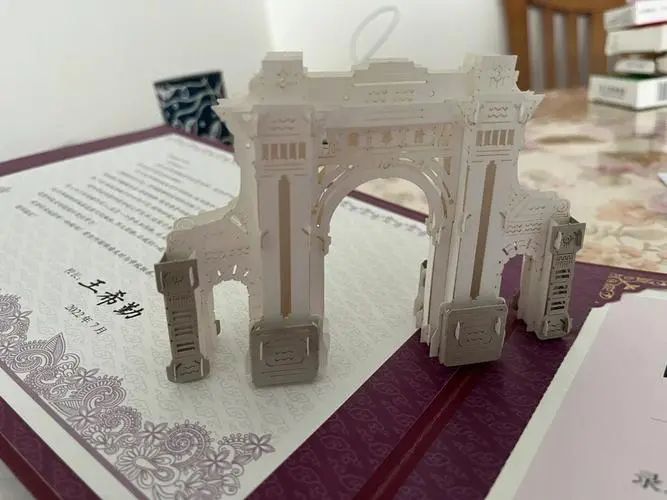
The admission notice in Australia is very formal and professional, but in my opinion, compared to the university admission notice in China, it lacks some fun and commemorative significance. The admission notice of Chinese universities will be designed based on the characteristics of each university, including the city where it is located. For example, the world-renowned Tsinghua University admission notice, when you open it, there will be a 3D printed school gate on it. This gate is the dream of every Chinese student, and it is also a landmark of the Chinese capital Beijing. It not only represents your recognition of this university, but also symbolizes the school’s long history and culture. So I hope to design an admission letter for a university solely under UOW University in Australia. The project development strategy I will focus on is Reframing, which I hope will break free from traditional and restrictive admission notices, and thus design more creative and effective problem-solving solutions. Compare with familiar concepts to open up creative possibilities. The purpose is to enable people from various countries around the world to understand that when you receive this offer, you will know that it is a unique offer belonging to UOW University in Australia.
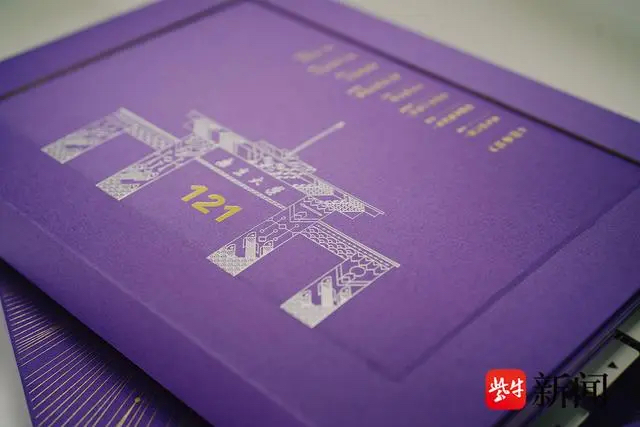
There is an example. Firstly, I would like to declare that I am an international student from China, so I have created this project based on the design of Chinese culture. In China, every university has a corresponding culture and heritage. Getting into an ideal university is the goal of every student, so if you are admitted to this university, how do you understand its characteristics and receive what kind of admission notice? This is very sophisticated in China. For example, at Nanjing University in China, the admission letter continues the purple outer box of previous years, with the beauty of mathematics hidden in every square inch: from equilateral triangles, to the six pointed star, to the Koch snowflake… In the inner box of the letter, the new students are also given a “Koch snowflake” badge. Why did you choose to incorporate the “Koch curve” into the design of admission letters? Wang Laibing, Assistant Director of the Undergraduate Admissions Office at Nanjing University, introduced that in 1904, Swedish mathematician Heilig von Koch proposed a method for constructing the Koch curve in his paper. From an equilateral triangle to a six pointed star, and then to the prototype of a snowflake, with an infinite increase in order N, the area of the Koch snowflake increased very little, while its circumference extended to infinity. The “Koch curve” with limited area and infinite boundaries is depicted as a purple snowflake, symbolizing the spirit of exploring the unknown and exploring new knowledge. In this notice, there is also a hidden “Southern Galaxy”. Freshmen only need to scan the QR code at the bottom right of Snowflake to join the “NJU Galaxy” composed of 13934 undergraduate planets. After removing all built-in cards, the admission notification box transforms into a beautiful photo album. This is the first commemoration given by Nanjing University to the 2023 freshman, Little Blue Whale. The illustration of the journey to the Drum Tower for root seeking learning and life will become the first picture in the album. Place the album on your desk to witness the unique day and year of your growth, and collect unforgettable memories of turning cocoons into butterflies.



 站点标题
站点标题 